

How to Fit a Kitchen for Beginners
You've decided it's time for a new kitchen. You've picked out your cabinets and worktop, and your tools are ready to go. The question is, where do you start?
At RUKKS Property Services, we provide property renovation and maintenance services across South Wales, including complete kitchen installations. So, we know how overwhelming that first kitchen project can feel.
If you’re curious about how it all comes together and fancy having a go yourself, this guide will break down exactly how to fit a kitchen step-by-step and how long it will take.
How Long Does a New Kitchen Take to Fit?
How long it takes to fit a kitchen depends on the size, layout, and complexity of the design.
As a general guide, if you're fitting your kitchen by yourself, it will take you around 2 to 3 weeks. This allows time for you to take measurements, make adjustments and source your materials.
If you're hiring professionals, a straightforward replacement will likely take between 2 and 4 days, while a full refit can take between 5 and 10 days.
If you'd like to speed up the time it takes to fit your kitchen, get a quote from RUKKS today, and we'll get straight to work!
How to Fit a Kitchen as a Beginner
Many homeowners take on the challenge of fitting their own kitchen, and it is absolutely achievable.
Here are the 5 essential steps you should take to fit your kitchen:
Prepare & Plan the Space
A successful kitchen fit begins with adequate preparation and planning.
Ensure you've cleared the room completely by removing any old cabinets, worktops, flooring, tiles and items, so you can work safely.
Check that your walls and floor are level and in good condition. Use a long spirit level or laser level to find any uneven areas and fix these before starting your kitchen fit. Uneven sections cause alignment problems during your installation.

Measure your room accurately, making note of doorways, windows, sockets, pipes, and switches. Sketch out where each cabinet and worktop will go to make sure it all fits the way you'd like.
On the wall, mark the top of your base units, which is typically between 870mm and 1000mm. Also, mark where your wall units will go. Their height falls in the ranges 570mm, 720mm and 900mm.
Assemble & Position the Units
Once you've finished planning, it's time to get stuck in.
Start by assembling your base and wall units on a soft surface to prevent scratches. Attach adjustable legs and ensure they’re roughly at the same height.
Place your first base unit on the line you marked earlier and check that it’s level front to back and side to side.
Work outwards from that point, adding one unit at a time, screwing through the side panels to connect them.
Check the alignment every few units, as it’s much easier to fix small adjustments as you go than to correct a crooked kitchen later.
Fit the Wall Cabinets
It's best to get someone to help you when fitting your wall cabinets, as they're quite heavy.
Once you're ready, start by fixing brackets or a hanging rail to the wall securely, making sure they’re level across the full run.

Hang each unit one by one, checking that they line up neatly with the others and secure them together using cabinet bolts through the side panels.
If your wall is uneven, use small timber shims behind brackets to achieve a perfect alignment.
Fit the Worktops, Sink, and Appliances
You're now at the step where your kitchen will begin to come together!
Measure and cut your worktops, creating cut-outs for sinks and hobs using a jigsaw or router.
Use worktop bolts underneath each section to join them together and apply a waterproof jointing compound to protect against moisture.
Fit the sink by adding a silicone sealant underneath, and connect the taps and waste pipes, testing for leaks.
Afterwards, you can install appliances. Always hire a qualified electrician or gas engineer to make the final connections.
Add Finishing Touches
You want your kitchen to look perfect, so it's time for the finishing touches.
If you'd like a clean built-in look, you can add plinths to cover the gap between your base units and the floor, hiding the adjustable legs.
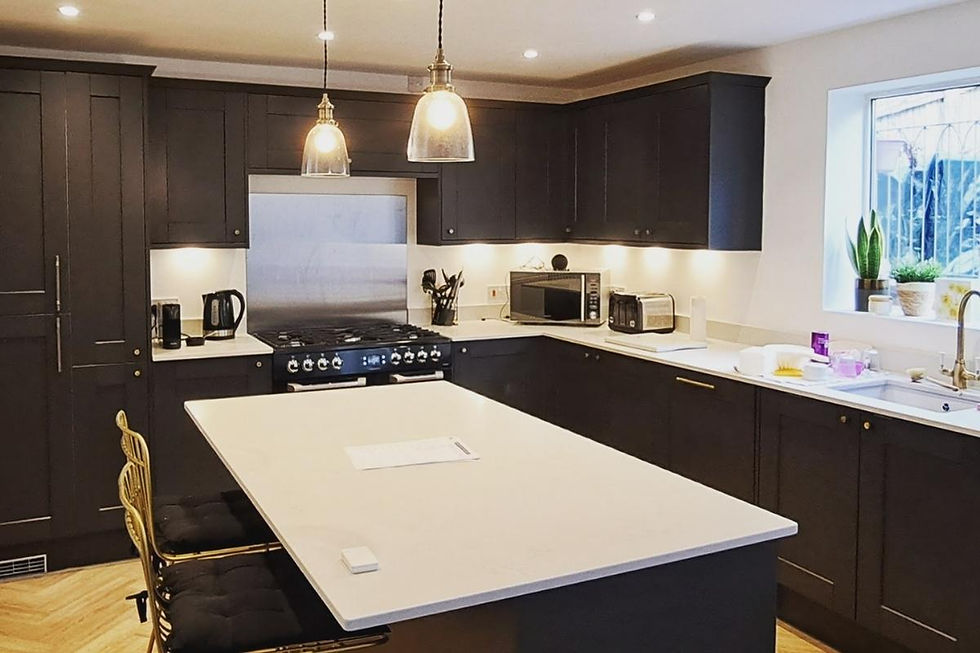
To add handles and knobs, measure their position carefully and drill a hole. Even a few millimetres off can throw off the symmetry of your doors.
Once drilled, screw handles or knobs in firmly, but don’t overtighten them as this can crack the door fronts or strip the threads.
Finally, use a screwdriver to fine-tune each hinge so doors hang straight and sit evenly.
Ready for a New Kitchen?
Fitting a kitchen is a big job, but with the right preparation and patience, it’s doable.
If you're feeling overwhelmed and would like to leave fitting your kitchen to the professionals, we'd love to help.
At RUKKS Property Services, our experts can handle everything, from planning and plumbing to electrics and final detailing.
Contact us to get a quote today, and let’s turn your plans into your perfect kitchen.
Comments